Most businesses make the same mistake in their marketing. They talk about themselves; their awards, process, team, years in business, technology, and capabilities. And prospects tune out, not because the business isn’t good or the offer isn’t valuable. But because the message is pointed in the wrong direction.
The prospect isn’t looking for a hero to admire. They’re looking for a guide who understands them. That one shift, from hero to guide, is the foundation of every effective marketing message you should build.
Authority Builder Playbook Principle #1: The Prospect Is The Hero
Why Most Companies Get This Wrong
It’s natural to want to lead with your strengths. You’ve worked hard to build your business. You have results, credentials, and experience worth sharing. Putting that front and center feels logical.
But here’s the problem: your prospect isn’t reading your content to learn about you. They’re reading it to find out if you understand them.
According to a recent research from HubSpot, 96% of website visitors aren’t ready to buy on their first visit. They’re evaluating. Assessing. Deciding whether you’re worth their time and attention. In that window, the only question that matters is: does this business get me?
When your marketing opens with your story instead of their problem, you lose them before the conversation even begins.
If The Prospect Is the Hero. What This Actually Means
In every great story, the hero faces a challenge. They feel the weight of a problem they haven’t been able to solve. They’re looking for someone; a mentor, a guide, a trusted advisor, who can help them navigate it.
Your prospect is that hero.
They have a problem. They have frustration. They have fear around making the wrong decision. They have a goal they haven’t reached yet. And they’re searching for a business that understands all of that well enough to actually help them.
Your role isn’t to be the hero of the story. Your role is to be the guide so your client can win.
Think of every mentor figure in film and literature; the ones who show up at exactly the right moment, understand what the hero is facing, and offer the knowledge or tools to move forward. That’s the positioning your marketing needs to occupy.
When you communicate from that position, prospects feel seen. They lean in. They start to trust you, not because you told them to, but because your message reflected their reality back to them.
What Prospect-First Marketing Looks Like in Practice
The difference between hero-positioning and guide-positioning shows up in language.

Company-as-hero: “We are an award-winning video production company with over 3,000 projects completed and a team of industry-leading strategists.”
Prospect-as-hero: “If you’ve invested in video content that didn’t move the needle, you’re not alone and the problem usually isn’t the production quality. It’s the strategy behind it.”
Both sentences communicate credibility. But only one of them makes the prospect feel understood.
The second version doesn’t ignore your company’s experience, it earns the right to mention it by first acknowledging the prospect’s real situation.
This is the principle in action: lead with their world, then introduce your solution.
The Four Questions Every Prospect Is Asking
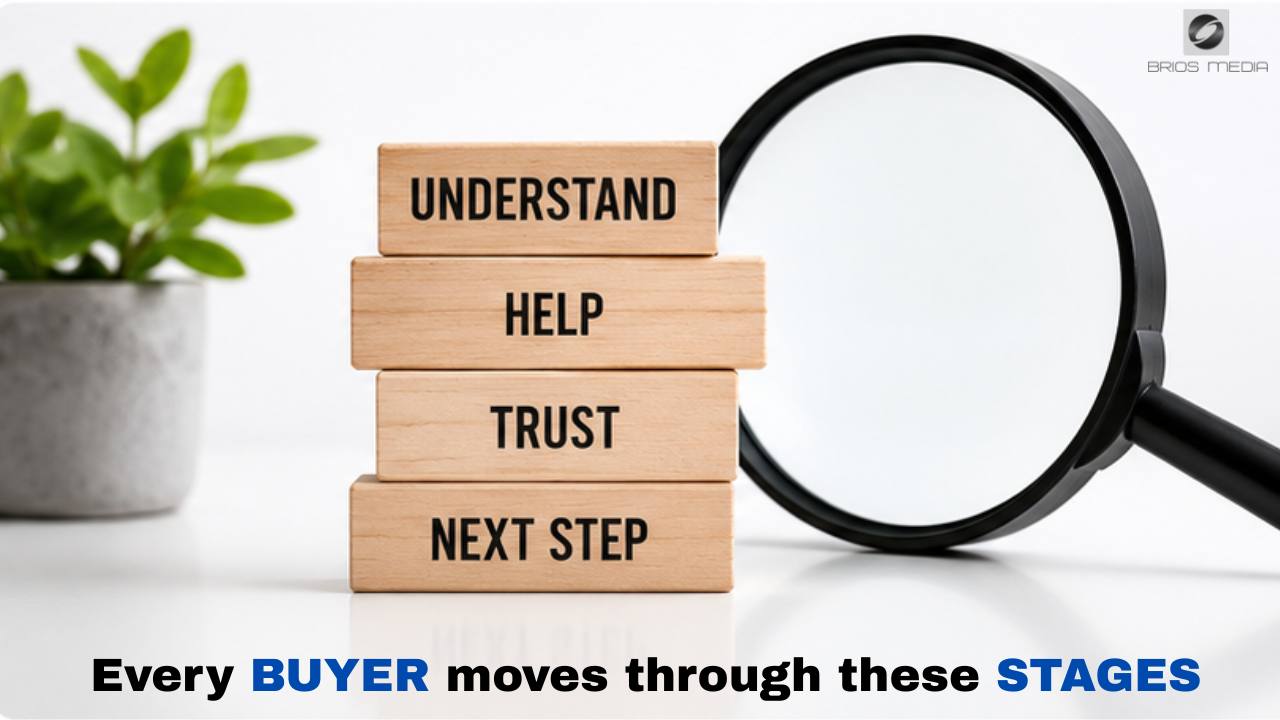
Before any prospect decides to take the next step with your business, they need answers to four questions, whether they ask them out loud or not:
- Do you understand my problem? This is the first filter. If your content doesn’t reflect their actual challenge, they move on.
- Can you help me? Once they feel understood, they want to know if you have a credible path forward.
- Can I trust you? Credentials, proof, specificity, and consistency all contribute here. Trust isn’t declared, it’s demonstrated.
- What happens next? A prospect who is ready to move forward needs a clear, low-friction next step. Confusion kills conversion.
When your marketing answers these four questions, in order, you don’t need to pressure anyone. The message does the work.
Why This Matters for Video Content Specifically
Video is one of the most powerful trust-building tools available to any business. But it only works when it’s built around the right story.
Most corporate videos follow a predictable formula: company overview, founding story, team introduction, service list, call to action. That structure puts the company at the center of the narrative.
The businesses that use video most effectively flip that structure entirely.
They open with a problem their ideal client is experiencing. They validate the frustration. They introduce the possibility of a better outcome. And only then; once the prospect is nodding along, do they introduce the business as the guide who can make that outcome possible.
This is what the Marketing Authority System is designed to uncover: where your current content is centered on you, and where it could be repositioned to center on your prospect. Because when that shift happens, conversion rates change. Trust accelerates. And the path from prospect to client gets shorter.
A Simple Test for Your Current Marketing
Pull up your homepage, your LinkedIn profile, or your most recent video. Read the first three sentences.
Ask yourself: who is this about?
If the answer is your business; your history, your team, your process, you have a positioning opportunity.
Now rewrite those three sentences with the prospect as the hero. Start with their problem. Acknowledge their frustration. Show them you understand what they’re navigating.
That rewrite, however small, is the beginning of a more effective marketing strategy.
The Outcome of Getting This Right
When prospects feel like the hero of your story; when your content speaks directly to their situation, their goals, and their concerns, something predictable happens.
They stay longer. They engage more. They reach out sooner.
Not because you convinced them. Because you understood them.
That’s the difference between marketing that performs and marketing that just exists.
Principle #1 isn’t a copywriting technique. It’s a philosophy. It’s the belief that the best way to earn a client is to first make them feel genuinely seen.
Every principle in the Authority Builder Playbook builds on this foundation. Because if the prospect isn’t the hero of your story, the rest of the strategy doesn’t matter.
Want to know where your current marketing is focused on the wrong story? Contact us and we’ll identify the specific gaps holding your content back.